Campus overview
The West Campus is a major center for engineering, applied sciences and advanced research at USTC.
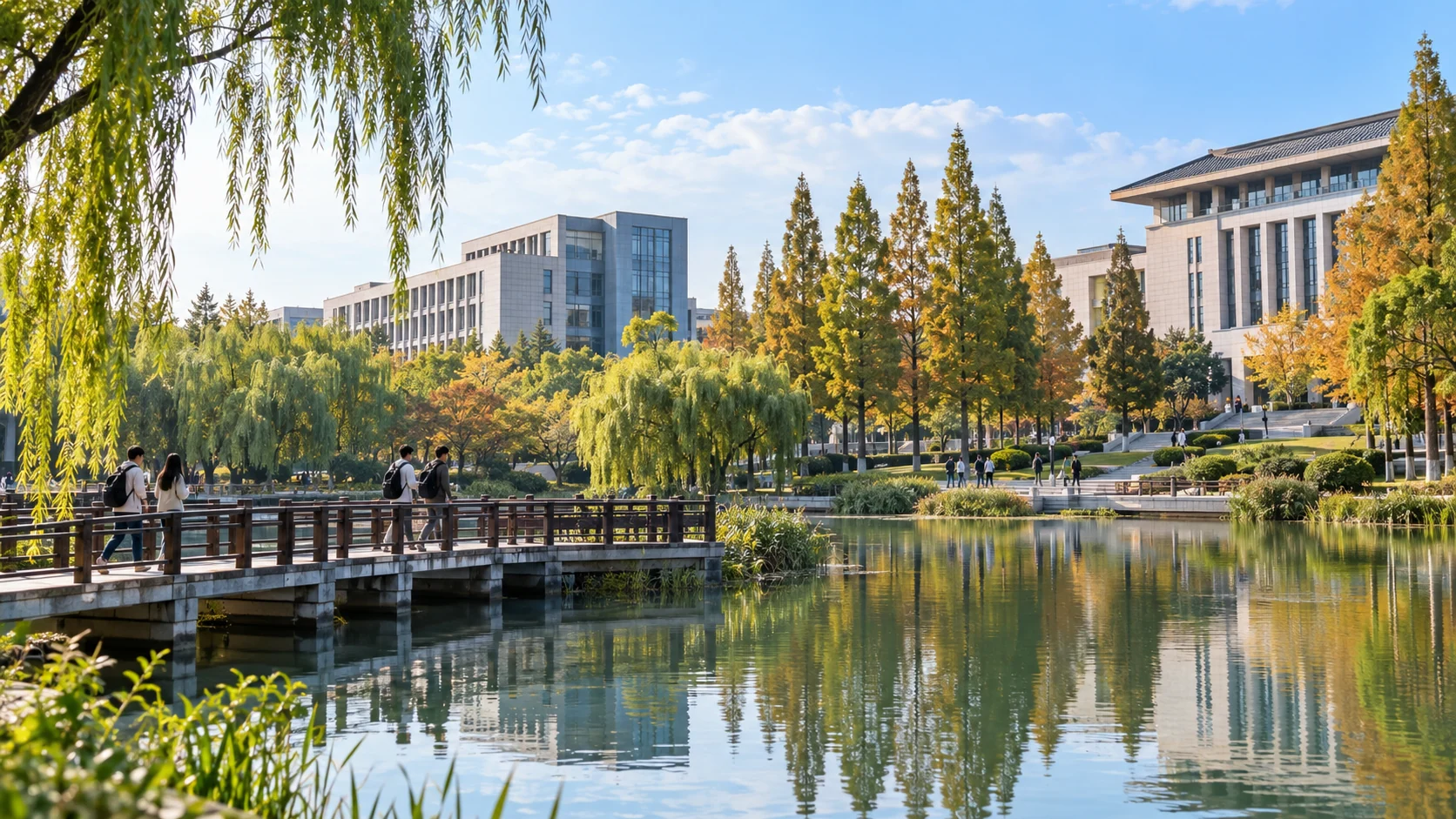
At a glance
Campus overview
The West Campus is a major center for engineering, applied sciences and advanced research at USTC.
Academic buildings, laboratories, the main West Campus Library and student facilities are located across the campus.
Development milestones
| Year | Milestone |
|---|---|
| 1984 | West Campus planning begins; NSRL groundbreaking takes place on 20 November. |
| 1986 | First-stage campus construction is approved. The foundation-stone ceremony takes place on 20 September. |
| 1988 | Students begin attending classes at West Campus. |
| 1997 | The West Campus Library opens in September. |
Campus life, history and setting
Campus overview | Campus life, history and setting
The campus is not a separate university. Its schools and laboratories contribute to the academic community of the University of Science and Technology of China, whose main institutional history began in 1958. West Campus combines several layers of university activity: credit-bearing teaching, research laboratories, specialist instrumentation, residences, dining and academic support. The buildings reflect different periods of growth; the library opened in 1997 while the associated synchrotron research project had already begun in the 1980s.
A campus shaped by teaching, laboratories and shared spaces
The northern Huangshan Road entrance, the winding internal paths and the division between teaching, laboratory and residential buildings influence how the campus is used. Students can encounter mathematics and management instruction, engineering experiments and scientific information resources in the same university environment.
The West Campus Library, opened in 1997, is one of the clearest examples of shared infrastructure serving many disciplines.
A closer look at Campus overview
West Campus developed through the 1980s as part of USTC’s expansion in Hefei. It now combines teaching buildings, laboratories, a central library and campus landscapes. This arrangement gives students access to both formal instruction and research-oriented environments, while links to the other university campuses broaden the range of facilities and services.